
Therapeutic properties of dill and contraindications for use

It is difficult to find a plant that would combine so many benefits and used in a variety of areas of human activity, as dill. Only at first glance it is a simple inhabitant of every vegetable garden, in fact, the odoriferous plant is a real treasure trove of substances that are important for maintaining beauty and health. In the article we will tell you about what the benefits of dill, how to use it and whether there are contraindications.
Composition
Dill belongs to the most ancient plants on the planet. It was known and actively used by the priests of ancient Egypt, Greek healers and oracles, it was highly valued by the herbalists of Persia and India. The first descriptions of the medical use of dill were made by Hippocrates and Dioscorides. They strongly recommended using the plant to heal diseases of the “stomach” (digestive system).
The incredible rich flavor of dill was praised in poems by Sappho and Bronzino. At different times, the plant was proposed to be used as an effective defense against evil charms, hostile magic. The most complete description of the medicinal raw material of dill was made by the medieval scientist Avicenna, who included the odoriferous plant in a treatise called “Canon of Medical Science”. According to the botanical classification, dill belongs to the monotypic series of short-lived annual herbaceous plants of the umbrella family.
The main characteristics of the plant are a spicy taste and a pronounced odor. All parts of the plant are used. Leaves, umbrellas, seeds – everything man has invented its purpose. Dill blooms in mid-summer, and ripens in early fall. Stems can reach a height of up to one and a half meters.
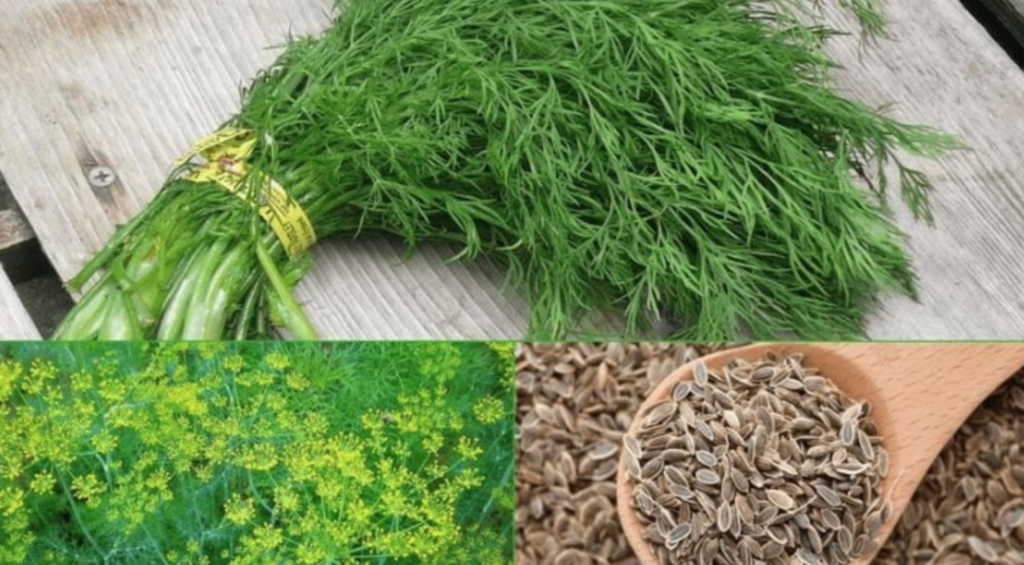
The chemical composition of this umbrella is very complex and diverse. Dill contains more than 100 substances with biological activity, it has vitamins and minerals. Roots, seeds and greens accumulate essential oil, which is the “culprit” of a surprisingly intense flavor. The seeds contain the most dill oil. Dill leaves contain a large amount of ascorbic and nicotinic acid. They also contain thiamine, carotene and riboflavin, carbohydrates and pectin.
Usefulness of dill also give large concentrations of flavonoids, in particular quercetin, kaempferol. Valued plant and for the presence of iron, calcium, potassium and phosphorus, as well as manganese, zinc, copper, molybdenum. Essential dill oil is quite fatty and contains petroselenic, oleic, linoleic acids. It has a delicate yellowish color, the smell is very similar to caraway. If you extract oil not from the fruit, but from the herbaceous part, it will be slightly greenish.
A plant with such a rich composition simply could not remain unnoticed neither by the doctors of antiquity, nor by modern doctors. In relation to dill, by the way, almost unanimous eternally arguing among themselves traditional and folk medicine. The plant occupies its niche in both. Vitamins and minerals in fresh and dried dill, abundance of essential oils and flavonoids are appreciated by all types of modern medicine.
Nutritional and energy value
Dill can rightfully be considered a dietary product, since its caloric value is low – only about 40 (according to some data – 38) kcal. But we note that the seeds have a much higher energy value (about 300 kcal), but since they are most often used in decoctions and infusions, such a caloric value, of course, no danger. Who is interested in the rules and principles of healthy eating, usually requests information not only on the calorie content, but also on the BJU formula. This balance in the plant is represented as follows (per 100 grams of product):
- proteins – 2.6 g;
- fats – 0.4 g;
- carbohydrates – 6.2 g;
- dietary fiber – 2.9 g;
- water – approximately 85 grams.
Benefits
Amazing in saturation and balance of substances, the chemical composition of the plant largely explains the love of ancient doctors for dill. Phytoncides in the essential oil of dill effectively slow down the development of most bacteria and pathogenic fungi. This property is widely used in the treatment of disorders of the digestive system, especially associated with metabolic disorders and the need to restore the normal ratio of intestinal microflora. Dill in its pure form and different versions of decoctions help relieve heaviness in the stomach after overeating, and also reduce gas formation in the intestines. This is well known to many generations of mothers, dill water they cope with physiological intestinal colic in newborns.
Vitamin and mineral composition promotes rejuvenation. With regular use of dill in food, the skin becomes more elastic, skin color is evened out. Due to calcium and iron improves the circulatory system, increases the tone of blood vessels. Essential oil in the composition of dill in combination with magnesium have a calming effect on the nervous system, the plant relieves excess tension, improves sleep, positively affects the mood as a mild natural antidepressant.
Systematic use of dill helps to strengthen the immune system, as well as the balance of immune processes in the human body. People who suffer from frequent cystitis and other diseases of the urinary system, know that dill has a mild and unobtrusive diuretic effect. It will also be useful to patients who have problems with the functioning of the gallbladder.
Official medicine recognizes for the plant several of its actions. Dill is not only a mild sedative, but also a fairly strong antispasmodic. Also, the plant has a vasodilating effect, which is very useful for high blood pressure. In addition to all of the above (and few people know about it), dill has expectorant action, quite effectively treats wet and prolonged cough.
Impact on the female body
Due to the content of terpene substances, dill becomes an excellent assistant in matters of normalization of the disturbed menstrual cycle. Women with such violations, especially those planning to conceive a baby, take squeezed from the dill juice along with green gruel. If a woman’s periods are weak, scanty, irregular, dill is added to tea. If menstrual bleeding, on the contrary, is characterized by abundance and painfulness, it is recommended to make a water infusion of dill seeds and its inflorescences.
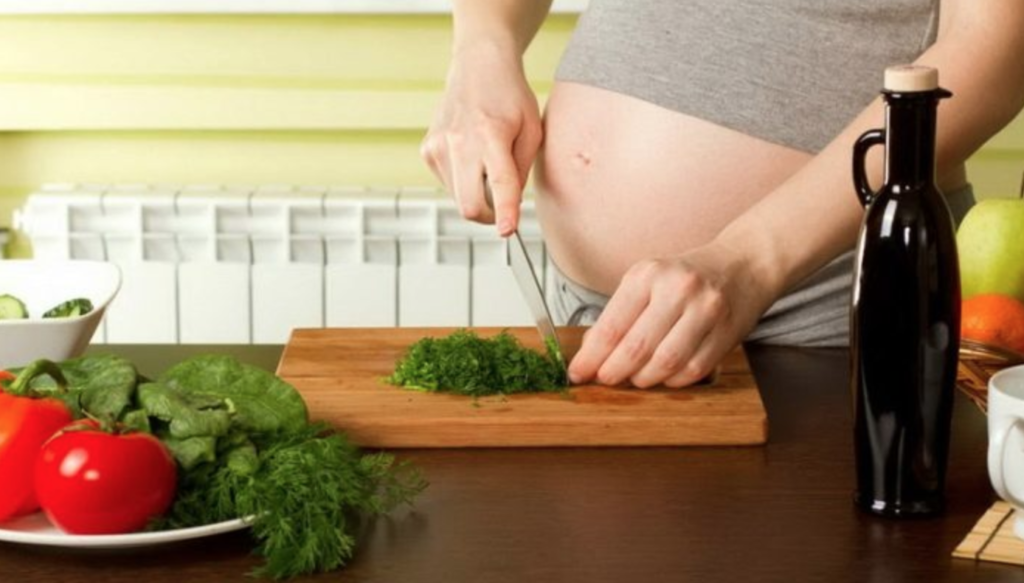
This green is indicated for the nutrition of pregnant women, especially in the last month before childbirth (antispasmodic effect will be useful in preparing the muscles of the pelvic floor and cervix for labor). And during pregnancy, and especially after childbirth, it is important for women to avoid constipation. In this task will also help a wonderful plant. In addition, it perfectly gets rid of edema during pregnancy and breastfeeding. For the child, the presence of the plant in the diet of a nursing mother will not be dangerous, it is recommended to add dill to the food from the 10th day after delivery.
Dill is included in a lot of cosmetic recipes, because it quickly eliminates circles under the eyes, relieves redness, improves skin color. Cosmetic masks from dill deserve special attention of women aged 45 years and older, because these means are very effective against physiologically fading skin.
Effects on the male organism

Dill increases men’s sexual desires, increases libido. This property of the plant was discovered first by Hippocrates, which was immediately reported to his compatriots and descendants, describing in his works. After that, the Greeks had an unspoken tradition of giving a branch of dill to newlyweds. The groom was pinned on his clothes.
Respect plant and men in age, because the decoction of seeds increases potency and makes sexual sensations more vivid. This action is due to the vasodilating effect of the product, because all the vessels are dilated, including in the cavernous body of the penis.
Men who work hard, nervous, sleep badly, may well use dill to find peace of mind and healthy sleep. Smokers, in order not to embarrass others with bad breath, can use sprigs of the plant to freshen the mouth, to eliminate bad odor. In addition to this, dill also strengthens the gums.
Effect on children
Decoction of dill can be given to children from birth – it effectively helps to reduce infantile colic, which until the age of three months almost all children suffer from. At an older age, the decoction will be useful to increase appetite in “malo-ezhka”. Dill is suitable for feeding babies with intestinal disorders, because it quickly and effectively reduces the amount of intestinal gas and eliminates excessive manifestations of flatulence.
If the child is prone to skin allergies, diathesis, then the decoction can not only drink, but also make lotions on the affected skin. Fruits of dill in a mixture with pork fat can even remove lice in pediculosis. But such methods are a thing of the past, because today there are many faster and completely safe means of eliminating this scourge.
If you summarize all of the above, then you can safely designate a circle of problems in which the use of dill will be most desirable:
- overweight, obesity;
- gallbladder disease, biliary dyskinesia, bile outflow disorders;
- diseases of the kidneys and ureters, bladder;
- gastric acidity disorders, gastritis;
- stool disorder, flatulence;
- allergic sensitization;
- headaches and insomnia;
- nervous overexcitement, stress;
- high blood pressure, hypertension;
- dermatologic problems, pustular skin diseases, acne;
- disorders of sexual and reproductive functions in men and women.
Contraindications
Due to the presence of essential oil, dill is a danger for people with hypersensitivity to the components in the composition. Allergic people should use dill with caution, especially the seeds and rhizomes of the plant, as it can cause harm to health. Special attention should be paid to the use of the plant in childhood, for infants. If signs of allergy appear, you should refuse to use the plant. Allergy to dill in children is usually manifested by skin rashes of the urticaria type, as well as digestive disorders.
Given the strong antispasmodic effect of dill oil, you should not use it for pregnant women in the first and second trimester, because it can provoke a miscarriage. But you should not refuse to add the greens of the plant to food, since the leaves do not contain a critical amount of essential oil.
Also cautiously should take means from dill men to increase libido and improve potency, if the representative of the stronger sex has problems with the health of the heart and blood vessels. The plant increases sexual appetite, but excessive loads associated with this can be dangerous.
Features of application
The greens and seeds of dill have found their application in cooking. They are used to add as a spice in fresh and dried form in salads, soups, in second dishes. Stems and seeds (umbrellas) are used in canning, their hostesses add to the brine for cucumbers, tomatoes, patissons.
The plant is very popular with healers of non-traditional medicine, as well as with quite official doctors. The medicinal use of odoriferous dill implies the preparation of juice, including with pulp, decoction, infusion.
- Aqueous infusion is used to improve lactation during breastfeeding, to reduce the manifestations of infantile physiologic colic in newborns. It is also often recommended to drink it for arrhythmia and tachycardia to normalize the rhythm, strengthen the heart muscle. Especially shown water infusion to patients with diagnosed atherosclerosis, as it helps to get rid of cholesterol plaques. Dill water or infusion is indicated for anemia and regional inflammation of lymph nodes.
- Infusion prepared from the seeds of the plant is used as an anti-inflammatory agent, diuretic and moderate antispasmodic in cystitis, nephritis, urethritis, urolithiasis.
- Infusion of greens are used to normalize the menstrual cycle, and also take with abnormal uterine bleeding of various etiologies. It is recommended to drink with hemorrhoids, running with anal fissures and blood discharge. Tincture will be useful and for the treatment of frequent nosebleeds in children and adults.
- Aqueous decoction of dill seeds are used not only for diseases of the urogenital system, but also to normalize blood pressure in hypertension. Decoction of dill seeds, cooked on a water bath, used to treat problems with bile excretion.
- Aqueous infusion of the plant in combination with honey is used to treat respiratory diseases as an expectorant, as an auxiliary treatment for tuberculosis, bronchitis, bronchial asthma.
- Aqueous and alcohol infusion of seeds and green parts of the plant is used to treat boils, acne, eczema.
- Concentrated aqueous infusion for adding to the bath is used for numerous skin problems.
- Decoction of greens is used for gastrointestinal diseases, with increased gas in the intestines, as well as for spritzing for many inflammatory gynecological diseases.
- The essential oil is used in aromatherapy, also for rubbing for joint inflammation and muscle pain and for rubbing on the temples for migraines and severe headaches.
