
Sesame: useful properties and uses

Sesame, one of the oldest oilseed plants, is renowned for its unique health benefits and wide range of applications. These tiny seeds are packed with vitamins, minerals, and antioxidants that have a positive impact on health. In this article, we will explore the benefits of sesame and how it can be used in everyday life.
You’ll be just as interested: Therapeutic properties of dill and contraindications for use
Composition and calories
Sesame is poetically called “the emperor of grains of the East and the king of oils of the West”. And not for nothing – it contains 10 substances that the body needs for good health. The table clearly demonstrates how many vitamins and minerals from the daily norm of an adult contains in 35 g of the product.
| Nutrients | Percentage of content | Effect on the body |
| copper | 163% | Involved in the production of hemoglobin, proteins and enzymes |
| manganese | 45% | Helps the absorption of vitamins B, C, E, prevents the development of diabetes mellitus |
| calcium | 35% | Forms tooth and bone tissue, supports heart and nervous system function |
| magnesium | 32% | It improves the production of enzymes and sex hormones and enhances immune functions |
| phosphorus | 32% | Strengthens bones and teeth, increases intellectual ability |
| iron | 29% | Forms red blood cells, ensures proper functioning of the heart and intestines |
| zinc | 25% | Regulates the immune and nervous system, accelerates cell division |
| molybdenum | 24% | Promotes the absorption of vitamin C, removes uric acid from tissues |
| selenium | 23% | Protects against viruses, prevents the development of cancer, rheumatism, male infertility |
| vitamin B1 | 23% | Ensures normal functions of the brain, nervous system, stomach and kidneys |
In addition, the product includes 2 unique substances: sesamin and sesamolin. These water-soluble antioxidants effectively prevent the aging of the body, the development of cardiovascular disease and oncology.
Sesame seed is 52% fat and 32% vegetable protein. This combination is very caloric – 560 Kcal per 100 g. In a day you can consume about 1.5 tbsp. without harm to health.
Useful and medicinal properties
Legendary Oriental healer Ibn Sina (Avicenna) described sesame seed as an excellent cleanser for the intestines. Medieval healers prepared remedies for dry coughs, constipation and anemia from the seeds.
Modern medicine confirms the following healing properties of the product:
- Prevention of the development of cancer of the stomach, colon and breast;
- prevention of osteoporosis and femoral neck fractures;
- improving the condition of patients suffering from asthma and bronchitis;
- normalization of sugar and cholesterol levels;
- relaxation of blood vessels and lowering of blood pressure;
- relieving rheumatic pains and swellings.
For treatment, only seeds that have not been subjected to heat treatment are effective.
Benefits for men’s health
Sesame seeds have powerful benefits for the male reproductive system. They are rich in arginine, an amino acid that produces nitric oxide in the body tissues. This compound speeds up blood flow, which helps to improve erections.
The active oxygen species and antioxidants included in the product relieve oxidative stress, which repairs sperm DNA damage. Scientific studies have proven that with regular use, the number of sperm increases by 3% and their motility by 50%.
To ensure that the level of the male hormone testosterone corresponds to the natural norm, the daily diet should contain 11 mg of zinc. In 1 tbsp. spoon of seeds contains 10 mg of this trace element.
Benefits for women
The well-being of a woman is directly related to the level of female sex hormones. Sesame seed is saturated with Omega-3 fatty acids, which ensure hormonal balance and increase the chances of getting pregnant. The healthy fats enhance the production of estrogen, which helps in increasing the size of breasts.
Consumption of raw seeds in the second half of the female cycle eliminates the unpleasant symptoms of PMS – nervousness, sleepiness, swelling and increased appetite. Sesame helps menopausal women to reduce hot flashes and improve sleep.
In pregnancy and lactation
During the planning period of pregnancy, it is useful to eat 1-2 tbsp. spoonfuls of sesame seed every day. The folic acid it contains prevents neural tube defects in the embryo. Iron prevents anemia characteristic of pregnancy, and calcium strengthens the teeth of the mother and participates in the construction of the skeleton of the child.
Here are a few more benefits for moms-to-be:
- Enrichment of the body with amino acids, proteins, vitamins B, C, E;
- elimination of constipation;
- increase immunity, important for the prevention of acute respiratory infections and influenza;
- normalization of urine flow;
- strengthening of muscles and nerves.
However, in the first trimester, you should refrain from sesame – it can stimulate early miscarriages.
Sesame seed is also useful during breastfeeding – it increases milk production and enriches it with calcium, important for the growth of the baby.
Can sesame seeds be given to children
Until the age of 2 years, the child should not be offered sesame seed or even sprinkled on baked goods. There are 2 reasons for this – small grains can get into the respiratory throat of the crumb, and also cause allergies. In the diet of children and adolescents from 2 to 17 years old, the product can be included every day.
Doctors-nutritionists call 5 beneficial factors for children’s health:
- providing the body with plenty of energy;
- preventing tooth decay;
- strengthening and growth of bones;
- protecting the liver from toxins;
- rapid healing of wounds.
Daily norm of the product for a child – 1 tsp.
Areas of application
In different parts of the world, the useful plant is used in its own way – in agriculture, pharmaceuticals, cosmetics. In India, sesame seeds are a symbolic part of folk festivals and religious rituals. Africans plant the plant at the door to ward off evil spirits, and American farmers decorate their flower beds with it. But most often, sesame is used for cooking, curing illnesses and caring for one’s appearance.
Culinary uses
Asian cooks put whole, unroasted sesame seeds in food. In Japan, it is an important part of the garnish and an aesthetic decoration. Fish is sprinkled with black sesame seeds and dark seafood with light ones. On the Japanese table, the flavorful seeds are no less important than salt and pepper. In Korea, the seed is added to salads and sauces for everyday dishes.
An indispensable element of the Middle Eastern diet is tahini, a thick paste made of sesame seeds grinded with chickpeas. In Israel, Syria and Egypt this dish is served with every breakfast and lunch, and for the Bedouins of the Arabian Desert tahini is a staple food.
In Arab and Central Asian countries sesame is turned into halva, sprinkled on sweet and unleavened baked goods. The famous Turkish bagels-simit are unthinkable without sesame sprinkles. In Iraq, tahini is mixed with date syrup and eaten spread on bread like jam.
In the West, the product is less common. It is used to flavor and decorate bread, rolls, and crackers. Sesame sticks and honey-based bars are also available in health food stores.
Modern cooks suggest adding sesame to rice side dishes, sprinkling it on fresh salads and homemade baked goods. The flavor of grains gives piquancy to roasted pumpkin and boiled broccoli. Especially well combined with fried chicken, sea fish and seafood – shrimp, octopus, squid.
In official and folk medicine
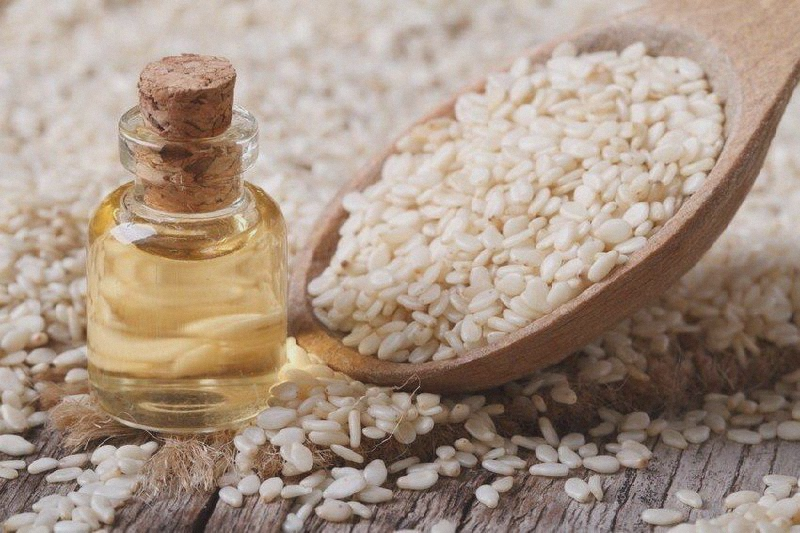
In medical practice, not the whole seed, but sesame oil is more often used. On its basis, fat-soluble preparations for injections, emulsions for creams and wound-healing patches are produced. Japanese pharmaceutical companies produce sesamin in tablets – a remedy to reduce hangovers.
In alternative medicine, sesame seed is used for the following diseases:
- Diarrhea. Crushed seeds are mixed with honey in a ratio of 1:1, slightly diluted with water. Take 1 tbsp. several times a day until the condition improves.
- Gastritis and colitis. Take before meals 2 tsp. several times a day.
- Neuralgic pains. Toast the seeds in a pan, grind into a powder, take 1 tbsp. 1 time a day.
- Overweight. Soak overnight 200 g of seeds. Then crushed in a mixer, add 250 g of water. Strain, pour into a glass jar and put in the heat for 12 hours. Drink 1 tbsp. 15 minutes before each meal.
Sesame oil treat burns, fungus on the toes, inflammation of the gums and skin.
Use of sesame oil in cosmetology
The most important component of sesame oil – zinc, the strongest stimulator of collagen production. It increases skin elasticity, heals damaged tissues, reduces wrinkles, eliminates acne. With the help of healing oil you can do a general body massage, treat cracked heels and diaper rash in infants.
Here are a few more ways to care for your appearance with oil:
- makeup removal;
- oil masks for hair;
- use as a night cream for the face;
- application to the body after sunbathing;
- restoration of hair color in case of early graying.
Black sesame seed oil is better suited for the last method.
Harm and medical contraindications
The main category of people who are forbidden to consume sesame are asthmatics and allergy sufferers. Like all nuts, fragrant grains often cause attacks of shortness of breath, runny nose, urticaria and even anaphylactic shock – extremely dangerous swelling of soft tissues.
Outwardly light and thin, the seeds are abundantly saturated with fat. In 100 g of seeds contains 8 g of fat, which is 40% of the daily norm. Therefore, an excess of sesame in the diet leads to excess weight gain. Other harmful effects occur when the product is abused.
If you regularly eat more than 3 teaspoons of whole sesame seeds per day, dangerous diseases can develop:
- colitis;
- chronic diarrhea;
- colon cancer.
Even a single exceeding of the daily norm can lead to constipation, diarrhea or appendicitis.
Black and white variety – which is healthier?
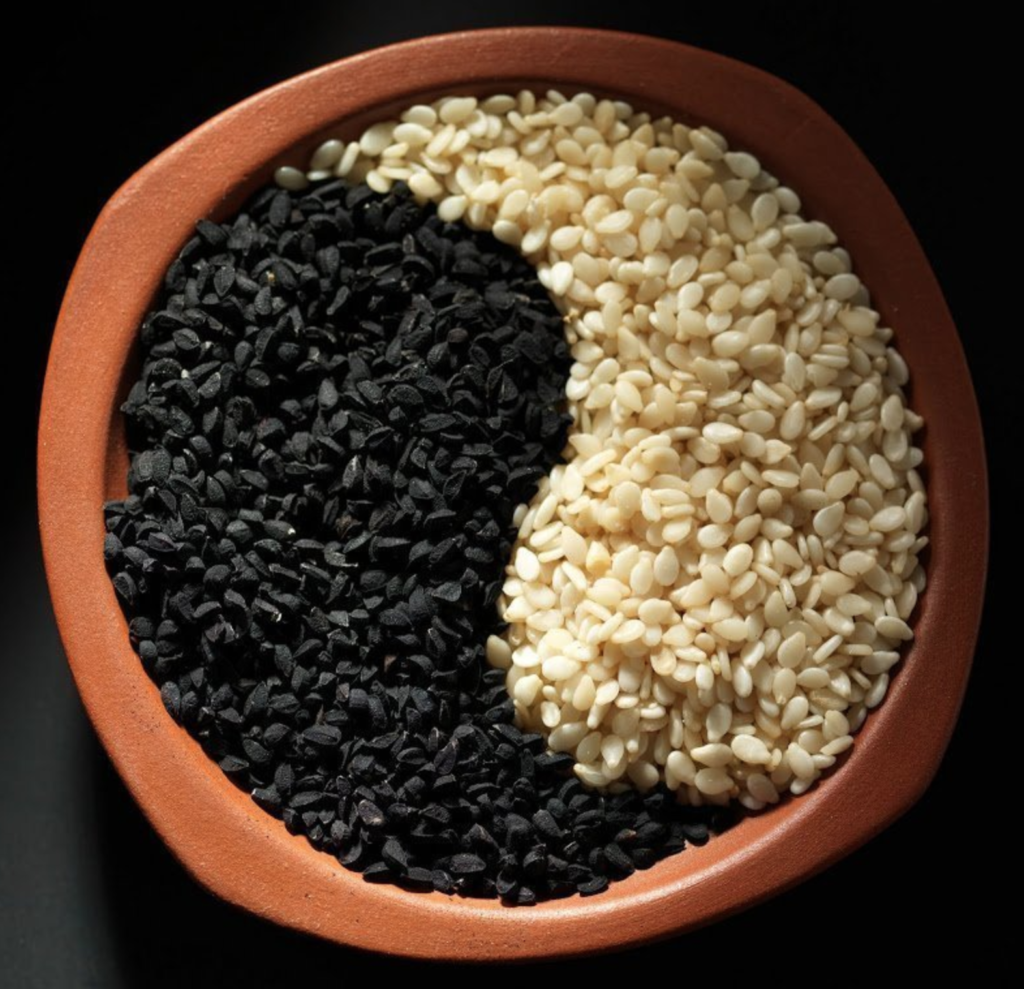
For sprinkling bread and confectionery products, white sesame seeds are more often used. They are softer, as they are cleaned from the husk, and are characterized by a bright sweet flavor. The black “relative” retains a crispy shell with a rich nutty flavor.
But white sesame is not just black seeds without husks. Black and white are two different varieties that are about the same in nutritional value. But black seeds are higher in antioxidants, calcium, zinc and B vitamins.
How to choose and store
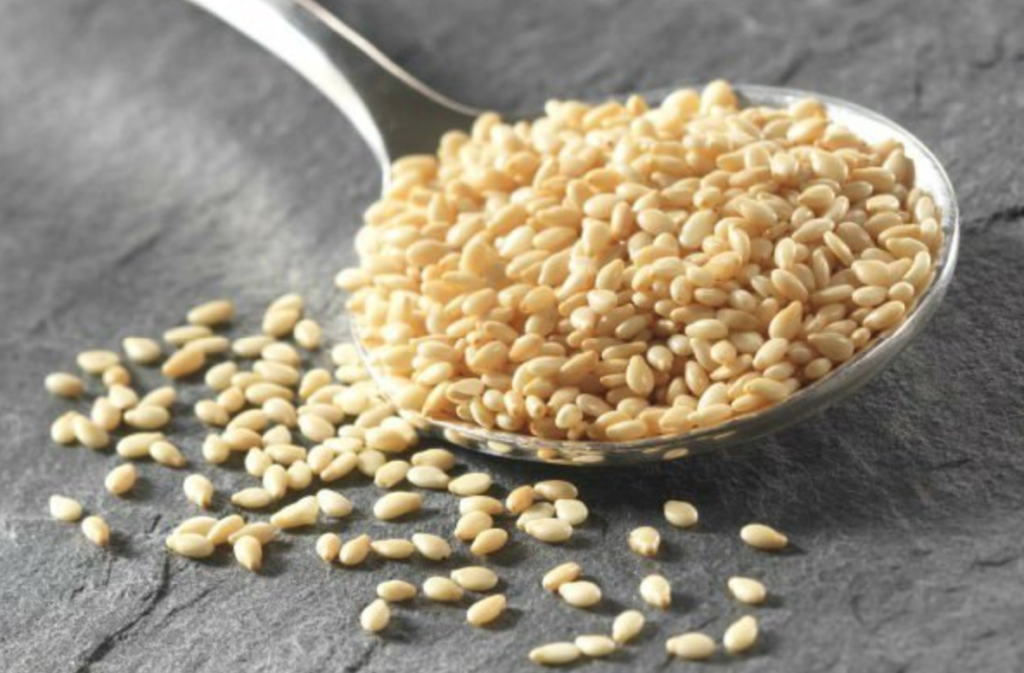
The correct choice of the product depends on the purpose for which it is purchased. If the seeds will be used only for baking, then you can choose the white variety. Ready-made store packaging guarantees that the grains will be fresh. At home, they should be immediately toasted on a dry skillet. This will enhance the nutty flavor and protect the oily base of the seeds from spoilage. Store roasted sesame seeds in a tightly closed container.
For preparing salads and adding to side dishes, unroasted sesame seeds, white or black, are more suitable. To prevent the oil in them from going rancid, the seeds can be stored in the freezer. If the sesame seed is intended for treatment, buy a black variety, in small quantities, to use fresh.
